Google Analytics tracking is disabled by default, but you can help us understand and improve your experience by enabling it.
Flexion blog
Read the latest articles from Flexion.
3 lessons from a software architect on AI product engineering
AI can speed software construction, but government delivery teams still need human judgment to frame problems and verify outcomes. Three examples show how hypotheses, durable evidence, and deterministic checks keep AI work honest.
Most agile teams treat story points as gospel. Flexion doesn’t. Here’s the statistical and behavioral case for counting stories instead of sizing them, and the one situation where estimation still earns its keep.
Hiring an AI lead is only the beginning. Learn how the right organizational placement, onboarding strategy, and cross-functional influence help AI leaders accelerate enterprise AI adoption and deliver lasting business impact.
Three operating models describe where AI sits in a team’s work: Assisted , First , and Native. Choosing the right fit requires matching the model to your actual bottleneck, not your ambition.
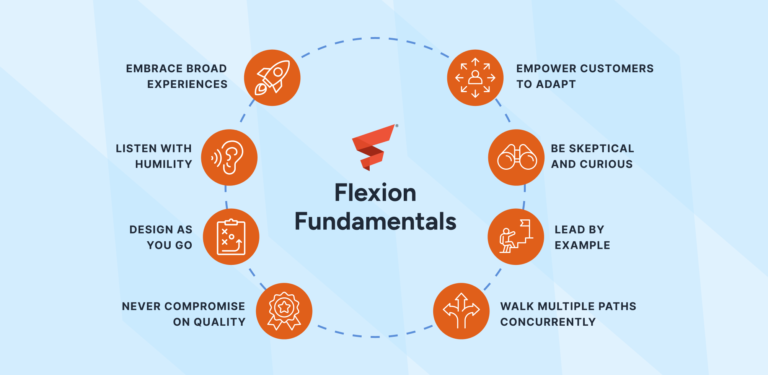
Flexion’s 8 fundamentals do more than guide projects; they shape how teams collaborate, listen, and adapt. From embracing broad experiences to walking multiple paths concurrently, here’s how each one shows up in our work and culture.
Five early patterns in agile work breakdown, from story titles users can’t understand to estimates teams are pressured to commit to, can predict delivery struggles long before they become crises.
Learn how to build an amazing project team with proven strategies for trust, psychological safety, autonomy, and collaborative practices that strengthen team culture and results.
AI in product management has shifted from optional to essential. Learn about a PM’s journey into AI literacy and what it takes to become an AI product manager in today’s evolving systems.